Wongyal Travels
Tsomgo Lake, Baba Mandir and Nathula Pass: A Day Trip Guide from Gangtok
Tsomgo Lake (3,753 m / 12,313 ft), Baba Mandir (about 4,000 m / 13,000 ft) and Nathula Pass (4,310 m / 14,140 ft) all sit along one road running east from Gangtok toward the Indo-China border, so they are almost always done as a single full-day trip of roughly 56 km each way to the pass. Tsomgo Lake and Baba Mandir are open every day of the week, but Nathula Pass is open only Wednesday to Sunday (closed Monday and Tuesday) and only to Indian citizens. Everyone, Indian or foreign, needs a Protected Area Permit that a registered Sikkim operator has to arrange at least a day in advance.
It is the most popular day trip out of Gangtok, and for good reason. In a few hours you climb from a warm hill town to a frozen glacial lake, a much-loved army shrine and a live Himalayan border post at over 14,000 feet. The catch is that the open days, the permits and the altitude trip up a lot of first-timers, so it pays to plan the day around them rather than the other way round.
Here is how the route actually works, which day to keep free for Nathula, what the permit involves, why foreign passport holders cannot go all the way up, and how to handle the altitude, written from years of sending guests up this road.
The route, distances and altitudes
All three stops lie on the same climbing road, so the day runs in one direction: out of Gangtok, up to Tsomgo Lake, on to Baba Mandir, and finally Nathula Pass at the top near the border.
Tsomgo Lake is about 40 km from Gangtok. On paper that is barely over an hour, but with a winding mountain road, permit checkposts and traffic it is realistically 1.5 to 2 hours. Nathula Pass is about 56 km out and takes roughly 2.5 to 3 hours one way, because the final stretch is steep, high and slow.
The altitude gain is the real story. Gangtok sits near 5,500 ft; Tsomgo Lake is 12,313 ft (3,753 m); Baba Mandir is around 13,000 ft; Nathula Pass is 14,140 ft (4,310 m). That is close to 9,000 feet of climb in a single morning, which your body will notice.
Because of both the distance and the altitude, this is a full day out. Most vehicles leave Gangtok early, between 6 and 8 am, and are back by evening.
Which days is Nathula Pass open?
Nathula Pass is open five days a week, Wednesday through Sunday, and stays fully closed on Monday and Tuesday.
Tsomgo Lake and Baba Mandir, on the other hand, are open all seven days. So if you are in Gangtok only on a Monday or Tuesday, you can still enjoy the lake and the shrine; you simply cannot go up to the pass. If Nathula is on your wish list, keep a Wednesday-to-Sunday day free for it, and we build the itinerary around that.
Even on open days, nothing is guaranteed. The army can close the pass at short notice for heavy snow, landslides, road repair or border movements, so we check the day's status before you set off rather than promise it blindly.
Timings run short too. Traffic is allowed up only in the morning, and most vehicles are turned back by early afternoon, which is another reason to start at dawn.
The permit: who needs it and how it works
Tsomgo Lake, Baba Mandir and Nathula all lie inside a Protected Area close to an international border, so every visitor needs a Protected Area Permit (PAP). Nathula requires an additional permit on top of the Tsomgo one.
You cannot apply for this permit yourself. It has to be filed by a registered Sikkim travel agency, which is one of the main reasons this trip is done with a local operator and a private vehicle rather than solo.
We need a clear government photo ID and passport-size photographs for each traveller, submitted at least one day before the trip. Aadhaar is generally not accepted as proof of nationality for these border permits, so please carry a Voter ID, passport or driving licence.
Carry the original ID on the day itself, because it is checked at the border checkposts along the way. A small government permit fee applies, which we tell you upfront.
Can foreign nationals visit? The Nathula restriction
This is the part that catches many travellers off guard. Nathula Pass is a live, sensitive border with China, and foreign nationals are not permitted there at all. The same restriction applies to Gurudongmar Lake in the north and the Zuluk Silk Route loop in the east.
Foreign passport holders can still visit Tsomgo Lake and Baba Mandir, but with extra conditions: the permit must be arranged through a registered agency, usually for a group of two or more, and you must travel with a registered guide.
So for our foreign guests we plan a Tsomgo Lake and Baba Mandir day and replace Nathula with another high point, while Indian citizens can do the full route right up to the border fence. If your group is mixed, Indian and foreign, tell us in advance and we sort out who can go where without any surprises on the road.
Tsomgo Lake: yak rides and a frozen glacial lake
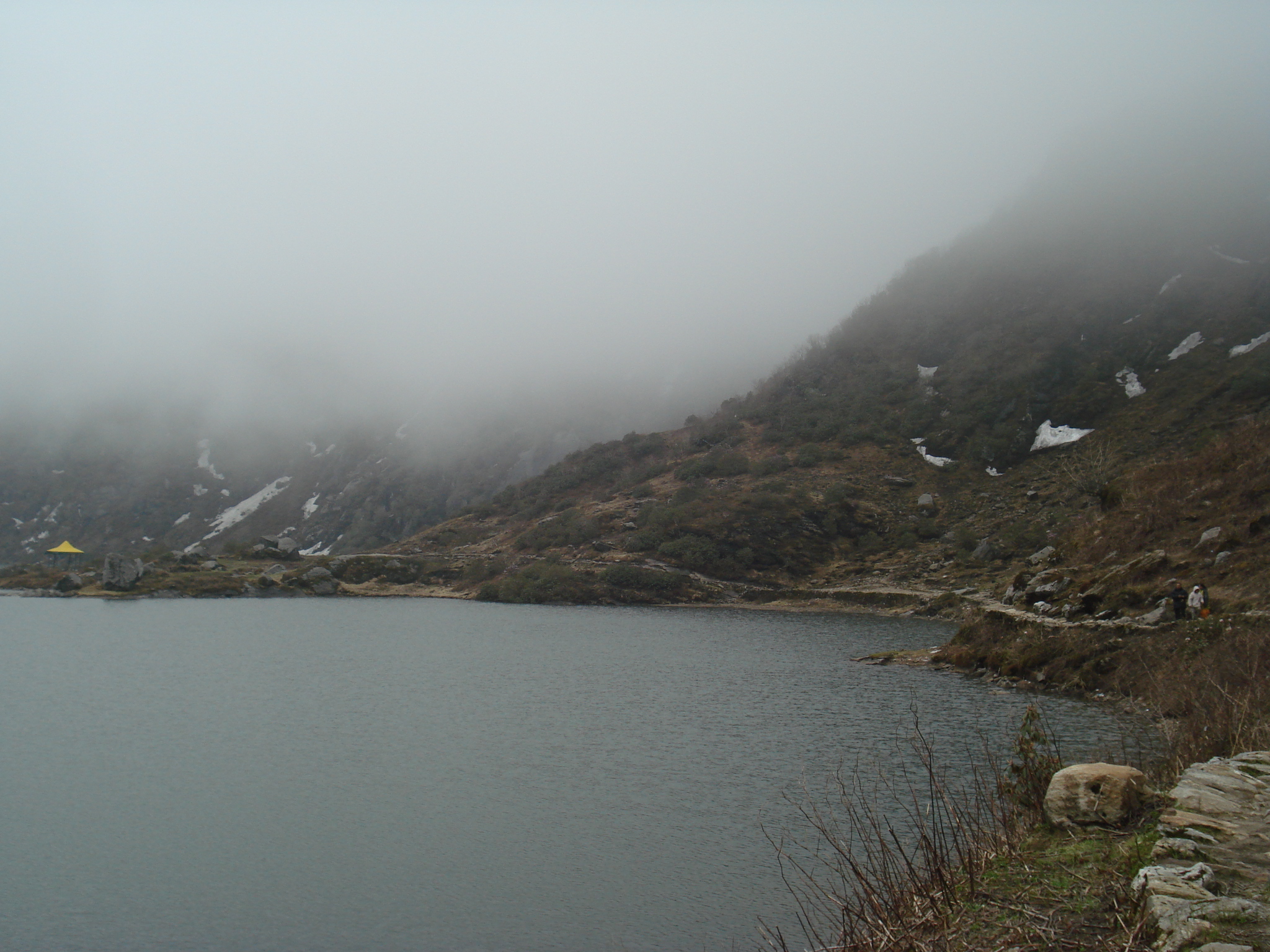
Tsomgo, also spelled Changu, is an oval glacial lake fed by snowmelt and held sacred by the Sikkimese; the name means source of the lake in Bhutia. It stays frozen through deep winter and is ringed by snow for much of the year, with primula and iris blooming on the slopes in spring.
The classic thing to do here is a short yak or pony ride along the banks. Rates are negotiated on the spot, so agree a price first, and please be gentle with the animals.
There is also a small ropeway (cable car) that lifts you for a view over the water when weather and season allow, plus a row of stalls selling hot Maggi, momos and tea that taste far better than they should at this altitude. Half an hour to forty-five minutes is usually enough. It is a protected, sacred lake, so carry your litter back down with you.
Baba Mandir: the soldier's shrine
Baba Mandir honours Baba Harbhajan Singh, an Indian Army soldier who died in this area in 1968 and whom soldiers still believe watches over the frontier. It is one of the most quietly moving stops on the route.
There are actually two shrines. The newer, more accessible Baba Mandir is the one most day trips visit; the original bunker, the old Baba Mandir higher up toward the pass, is where his belongings are kept. Jawans often serve hot tea to visitors. It is a calm, respectful place, so dress and behave accordingly.
Best time to visit, and the seasons
There is no single best month; it depends on what you want to see.
- For snow, come between mid-December and February or early March, when the lake freezes and everything turns deep white. It is bitterly cold, and heavy snowfall can shut the pass on the day.
- For clear skies and mountain views, October and November are hard to beat, crisp and dry after the monsoon.
- For spring colour, April and May bring flowers around Tsomgo and comfortable days.
- The monsoon, roughly June to mid-September, turns the hills green but brings landslides, roadblocks and cloud that hides the views, so we advise it with caution.
In every season, mornings are clearer. Cloud tends to build by afternoon, which, along with the permit timings, is why this trip starts so early.
Altitude, health and what to carry
Fourteen thousand feet is genuinely high, and the climb from Gangtok happens fast. Take it slow at the top, do not run around chasing photos, drink plenty of water, and avoid alcohol the night before.
Mild breathlessness or a light headache is common and usually passes. Anyone with heart or lung conditions, women who are pregnant, and families with very young infants should speak to a doctor first and consider skipping Nathula while still enjoying the lower stops.
Pack heavy woollens, gloves and a cap even in summer, because the top can hover near freezing. Bring sunglasses and sunscreen for the glare, motion-sickness tablets for the winding road, your ID originals, and some cash, as connectivity and ATMs are non-existent up there. Warm jackets and boots can also be hired near Tsomgo if you would rather not carry your own.
Planning your day trip from Gangtok
Done right, this is one full, unforgettable day: an early start from Gangtok in a private vehicle, permits already sorted, and a driver who knows the road, the checkposts and the weather moods of the pass.
It also slots neatly into a longer Sikkim plan. Many of our guests pair this East Sikkim day with a few days up north around Lachen and Lachung, so the permits and pacing are handled as one trip rather than piecemeal.
If you are starting to map out dates, send them to us on WhatsApp and we will tell you which day is best kept for Nathula, whether the pass is likely to be open, and how to fit the lake, the shrine and the border into your Gangtok stay. No rush and no hard sell, just honest local advice on what actually works.
Frequently asked questions
Is Nathula Pass open on Monday and Tuesday?
No. Nathula Pass is closed on Mondays and Tuesdays and open Wednesday to Sunday. Tsomgo Lake and Baba Mandir, however, stay open all seven days, so a Monday or Tuesday trip can still cover the lake and the shrine.
Can foreigners visit Nathula Pass?
No. Foreign nationals are not allowed at Nathula Pass because it is a live India-China border zone. Foreign passport holders can visit Tsomgo Lake and Baba Mandir with a Protected Area Permit and a registered guide, but not the pass itself, Gurudongmar Lake or the Zuluk loop.
Do I need a permit for Tsomgo Lake and Nathula Pass?
Yes. Both fall inside a Protected Area, so every visitor needs a Protected Area Permit, and Nathula needs an extra permit on top. You cannot apply yourself; a registered Sikkim operator files it at least a day in advance using your photo ID and passport-size photos.
How long is the drive from Gangtok?
Tsomgo Lake is about 40 km and roughly 1.5 to 2 hours away, while Nathula Pass is about 56 km and 2.5 to 3 hours one way. With all three stops it is a full day, usually starting between 6 and 8 am and returning by evening.
What is the best time to visit?
For snow and a frozen lake, come mid-December to February or early March. For clear mountain views, October and November are best; April and May bring spring flowers. The monsoon (June to mid-September) risks landslides and hidden views.
Is the trip safe for children and elderly travellers given the altitude?
Nathula reaches 14,140 ft, so go slow, stay hydrated and dress warm. Most people manage fine, but anyone with heart or lung conditions, pregnant women or very young infants should consult a doctor and consider skipping the pass while still enjoying Tsomgo and Baba Mandir.
Planning this trip?
Wongyal Travels is a Gangtok-based team with 11+ years arranging Sikkim and Darjeeling trips. Send your dates and group size for a practical plan and quote.